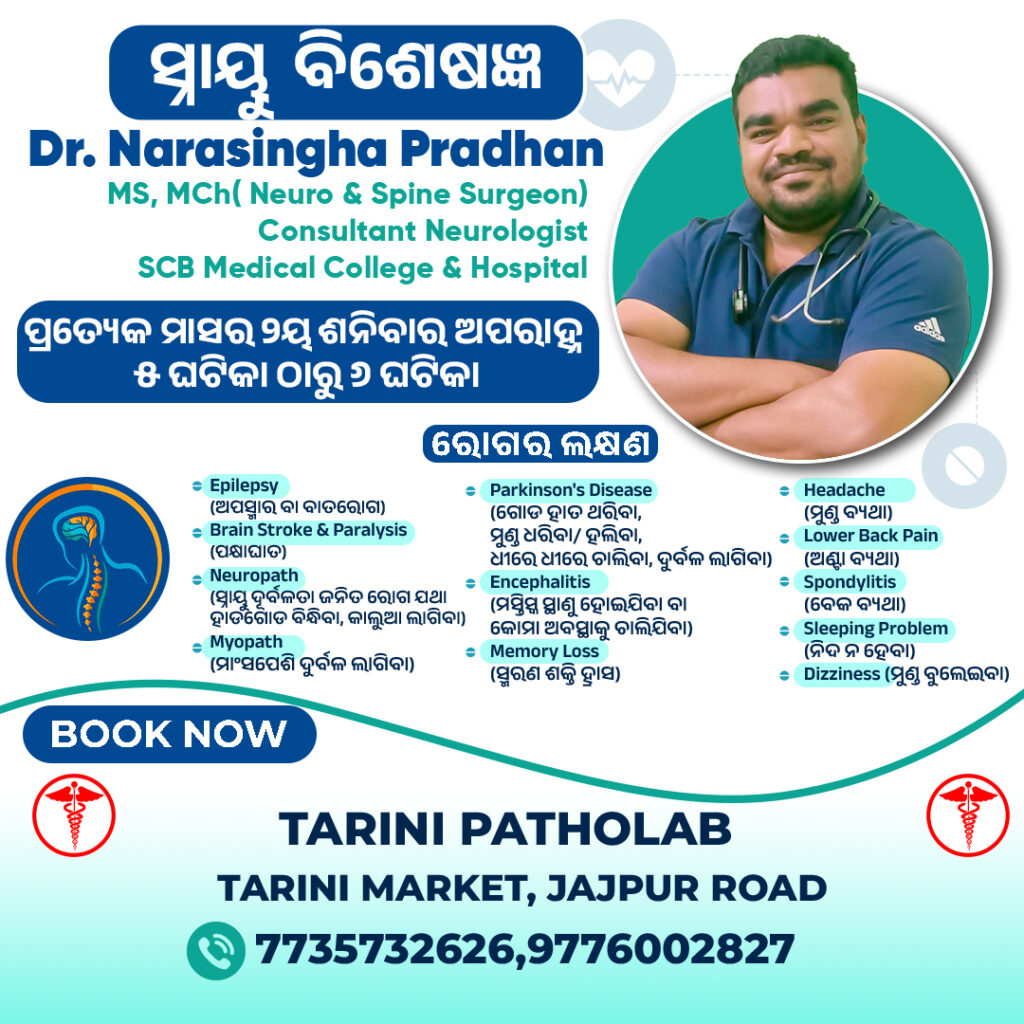
Dr. Narasingha Pradhan
MS, MCH, NEURO & SPINE SURGERN
SCB MEDICAL COLLEGE & HOSPITAL
CONSULT WITH PATIENT
1000+RECOVERED CASES
800+
RECOVERY PATIENTS
800+
Symptoms(ରୋଗର ଲକ୍ଷଣ)
Epilepsy (ବାତରୋଗ)
Epilepsy is a neurological disorder causing recurrent, unprovoked seizures from abnormal electrical brain activity. Affecting 50 million people worldwide, it can develop at any age. Seizures vary from brief awareness lapses to convulsions. Most cases are controlled with medication, though surgery or other therapies may help treatment-resistant epilepsy
Brain Stroke & Paralysis (ପକ୍ଷାଘାତ)
A brain stroke happens when the blood supply to a part of the brain suddenly stops. When the brain does not get oxygen, the affected area becomes damaged within minutes.
This can lead to paralysis (ପକ୍ଷାଘାତ) or weakness of one side of the body.
Neuropathy(ସ୍ନାୟୁ ଦୂର୍ବଳତା)
Neuropathy occurs when the nerves are damaged or do not function properly. These nerves carry signals between the brain, spinal cord, and the rest of the body. When they get affected, you may experience pain, burning, numbness, or weakness.
Encephalitis
(କୋମା ଅବସ୍ଥାକୁ ଚାଲିଯିବା)
Encephalitis is a serious medical condition where the brain becomes inflamed, usually due to viral infections or autoimmune reactions. This swelling affects normal brain function and can quickly become life-threatening if not treated on time
Memory Loss
(ସ୍ମରଣ ଶକ୍ତି ହ୍ରାସ)
Memory Loss refers to difficulty in remembering recent events, names, daily tasks, or important information. It can happen due to aging, stress, or medical conditions that affect the brain. Persistent memory problems may be an early sign of neurological disorders and should be evaluated by a specialist.
Sleeping Problem(ନିଦ ନ ହେବା)
Sleeping problems occur when a person has difficulty falling asleep, staying asleep, or waking up feeling tired. Persistent sleep disturbance can affect mood, memory, concentration, and overall brain health. If untreated, it may lead to neurological, psychological, and lifestyle-related
NEUROLOGICAL PREVENTION
Take steps to protect yourself
Keeping your brain and nerves healthy is possible with small lifestyle changes. Follow these tips to prevent neurological diseases like stroke, migraine, neuropathy, and memory loss.
(ମସ୍ତିଷ୍କ ଓ ସ୍ନାୟୁକୁ ସୁସ୍ଥ ରଖିବା ପାଇଁ ଜୀବନଶୈଳୀର କିଛି ସହଜ ପରିବର୍ତ୍ତନ ଅତ୍ୟାବଶ୍ୟକ | ନିମ୍ନଲିଖିତ ପଦକ୍ଷେପ ଗୁଡିକ ସ୍ଟ୍ରୋକ୍, ମାଇଗ୍ରେନ୍, ସ୍ନାୟୁ ଦୁର୍ବଳତା ଓ ସ୍ମରଣ ହ୍ରାସ ଭଳି ରୋଗକୁ ପ୍ରତିରୋଧ କରେ |)

- Healthy Lifestyle Habits (ସୁସ୍ଥ ଜୀବନ ଅଭ୍ୟାସ)
Maintain a regular sleep schedule.
(ସମୟରେ ଘୁମ୍ ଓ ଯଥେଷ୍ଟ ନିଦ୍ରା ନିଅନ୍ତୁ |)
Exercise regularly (Walking, Yoga, Meditation).
(ନିୟମିତ ଅଭ୍ୟାସ, ଯୋଗ ଓ ଧ୍ୟାନ କରନ୍ତୁ |)
Eat a balanced diet rich in fruits and vegetables.
(ସନ୍ତୁଳିତ ଖାଦ୍ୟ ଯେଉଁଥିରେ ଫଳ ଓ ସବୁଜ ସାଗ ଥାଏ, ତାହା ଖାନ୍ତୁ |)
Limit junk food, oily and sugary meals.
(ତେଲିଆ, ମିଠା ଓ ଜଙ୍କ ଫୁଡ୍ ଏଡ଼ାନ୍ତୁ |)

2.Health Monitoring (ସ୍ୱାସ୍ଥ୍ୟ ପରିକ୍ଷା)
Check blood pressure, sugar, and cholesterol regularly.
(ରକ୍ତଚାପ, ସୁଗର୍ ଓ କଲେଷ୍ଟେରଲ୍ ନିୟମିତ ଚେକ୍ କରନ୍ତୁ |)
Take medicines as prescribed by your doctor.
(ଡାକ୍ତରଙ୍କ ନିର୍ଦେଶ ଅନୁଯାୟୀ ଔଷଧ ସମୟରେ ନିଅନ୍ତୁ |)
Go for regular medical checkups.
(ନିୟମିତ ଭାବରେ ମେଡିକାଲ୍ ଚେକଅପ୍ କରନ୍ତୁ |)

3.Avoid Harmful Habits (ଖରାପ ଅଭ୍ୟାସ ଏଡ଼ାନ୍ତୁ)
Avoid smoking and alcohol.
(ଧୂମପାନ ଓ ମଦ୍ୟପାନ ଏଡ଼ାନ୍ତୁ |)
Reduce caffeine intake.
(କଫିନ୍ ଓ ଚାହା ହ୍ରାସ କରନ୍ତୁ |)
Control screen time, especially before sleep.
(ଘୁମ୍ ପୂର୍ବରୁ ମୋବାଇଲ୍ ଓ ସ୍କ୍ରିନ୍ ସମୟ ହ୍ରାସ କରନ୍ତୁ |)

- Mental & Emotional Health (ମନସିକ ଓ ଭାବନାତ୍ମକ ସୁସ୍ଥତା)
Manage stress with meditation or relaxation techniques.
(ଧ୍ୟାନ ଓ ଶାନ୍ତି ପ୍ରକ୍ରିୟା ଦ୍ୱାରା ଷ୍ଟ୍ରେସ୍ କମାନ୍ତୁ |)
Keep a positive attitude.
(ସକାରାତ୍ମକ ଚିନ୍ତା ରଖନ୍ତୁ |)
Consult a psychologist or neurologist if needed.
(ଆବଶ୍ୟକ ହେଲେ ମନୋଚିକିତ୍ସକ ବା ନ୍ୟୁରୋଲୋଜିଷ୍ଟ ସହ ସଲାହ ନିଅନ୍ତୁ |)